
Mental Health as Part of the Dalit Movement
In May 2026, FiPSR launched a new project in cooperation with the Nepali organization Dalit Lives Matter Global Alliance (DLMGA). DLMGA is a global social justice movement working to address caste-based inequalities, violations of human dignity, and structural violence through civic engagement and community empowerment.
Historically excluded from the caste system and subjected to practices of untouchability, Dalits make up 13.4% of Nepal’s population (2021 census). Despite constitutional protections, Dalit communities continue to face systematic injustice, and their access to services remains limited. These structural inequalities cause severe psychosocial distress, intergenerational trauma, and increased vulnerability. Dalit activists and human rights defenders also often carry a double burden: they engage in demanding advocacy work while simultaneously carrying their own experiences of caste-based discrimination.
A psychologist strengthening the resilience and collective healing of the Dalit movement
To address this challenge, the project employs a local psychologist whose work combines psychosocial support, staff wellbeing, training, research, as well as development and advocacy work. The psychologist provides comprehensive psychosocial support and consultation to DLMGA staff and activists, as well as to partner organizations operating in Madhesh and Lumbini provinces. At the same time, he is developing caste-sensitive models and structures for mental health and psychosocial support.
The psychologist works together with the DLMGA leadership to establish a Dignity Centre and integrate psychosocial support into the organization’s activities. Work responsibilities include developing organizational practices, supporting staff, providing counselling, delivering trainings, and building an evidence base for understanding, addressing, and recovering from caste-based trauma.
In addition, the psychologist works with young human rights advocates and other young people, strengthening their capacity through training to recognize and address the effects of caste-based trauma and to better understand the relationship between caste and mental health. The work also includes conducting case studies, preparing policy recommendations, and mapping existing counselling and support services.
The goal is for mental health and psychosocial wellbeing to become an integral part of the Dalit movement’s work, advocacy, and sustainability, strengthening individual resilience, collective capacity for recovery, and opportunities to build a more equal society.
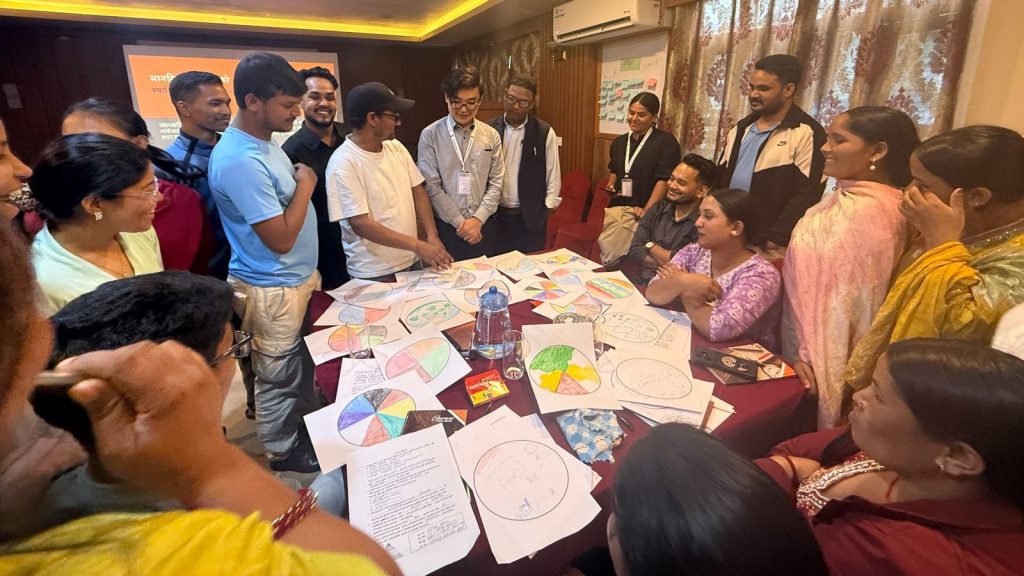
Photo: DLMGA psychologist Ashish Subba (centre, wearing a grey – colored shirt) leading a workshop on caste-based trauma for young people in Karnali Province.
Towards a Dignity Centre
The long-term goal is to establish a Dignity Centre in Nepal and an associated network that would provide caste-sensitive psychosocial support and counselling to Dalit communities, as well as referrals to legal and other services when needed. The psychologist has played a key role in developing the centre’s operating model and has prepared an operational manual outlining its principles and practical approach.
The planned centres would document cases of discrimination and violence, provide safe spaces for meetings and dialogue, as well as offer individual and group-based psychosocial counselling, peer support, crisis support, and referrals to legal services. The aim is to establish an accessible, community-based support structure for Dalit communities that can also serve as a foundation for further advocacy and social change.
Be a part of a unique opportunity to build mental health into the Dalit movement’s struggle for human rights and social justice.
Support the project <3
MobilePay: #39141
Bank account: FI90 8146 9710 4118 27
Or become a monthly donor by sending us a message at psv@vastuu.fi
Instagram: @dalitlives
Webpage: https://dalitlivesmatter.org/
Fundraising permit RA/2020/1295
Project reports
Major Activities so Far
Delegation at WHO Nepal as a part of DLMGA team
Policy Brief on Caste-Based MHPSS and Institutional Equity
Case Study of Victims (Caste-based discrimination)
Counseling and Emotional Support
Program Management – Three-Day Residential Training for Youth Human Rights Defenders
Design and Deliver Caste-Based Trauma Orientation to Youth
Design and Deliver Staff-wellbeing session
Desk Review of NGO-Led Counseling Centers
Establishment of a Counseling Room
Drafted Operational and Policy Manual for Dignity Center